13 May 2016

A match made in heaven

Among my many camera lenses I've owned or used, there is one lens that stands out as nearly impossibly good. Devine.

The 7:6 lens diagram designed by Mr. Yasunori Arai.


It was developed at Asahi Optical Company (aka Pentax) by Mr. Yasunori Arai and a few days ago it was 32 years since the final design patent passed: the SMC Pentax-A* 135mm f1.8. Mr Yasunori also designed the big gun SMC Pentax-A* 1200mm f8 ED IF. Judging from patents, he spent a great deal of his time working on Pentax astronomical lenses, especially how to minimize chromatic aberration in them. Perhaps this is why the A*135/1.8 does so well in that regard. If any reader knows more about Mr. Yasunori, or even have a photo of him for my page of Pentax lens designers, I would be most obliged.

The Super-A camera came in 1984, and with that the A serie of Pentax lenses, which is perhaps the most ambitious of their lens lines. I got my Super A in 1984, but it would take almost a decade before my copy of the A*135/1.8 found a home with me. By then autofocus had arrived and "destroyed" photography for ever. Seamingly intelligent persons sold of their excellent manual lenses to afford often mediocre autofocus lenses. To my benefit.

I was making one of my usuals tours on the streets of Stockholm shooting people, when I came by the camera shop "Sergel foto" andout of habit, I took a look in the window with second hand gear, and my eye cought the sight of an exceptionally fat lens. I entered, and asked the staff to let me take a look at that lens.

Probably I had been given a broshure with Pentax complete lens line when I bought the Super A, but lenses like this had never entered my plans to own. The weight. All that glass! The impossibly large front lense and gigantic apperture opening that appeared to suck in light... They were asking for 3500 Swedisk kronor, a fraction of its price as new. Still a lot of money for a graduate student, but I had recently got a 5 year position with a real salary and had some savings from pictures I've sold.... I had to have it. I could eat porridge and onion soup for a month!

I never regretted that.

I've shot a lot of film through that lens. Streetshooting, theater and conserts....weddings. Eventually I came to use it on my digital Pentax SLRs, but these were cropped sensors, and while it is an exelent and very fast 200mm eqiivalent on APS-C, it was a pitty I could not use its full image other than on film.

1984 meets 2016 thanks to Pentax backward compatibility.

 Then came finally Pentax with a full frame DSLR. And of course the A*135/1.8 was on the priority list to try out on the new Pentax K-1. I don't think a viewfinder has looked this bright since I used the same lens on my Super-A. So far I've only had the camera about a week...but here is some first samples shot in our garden with the A*135/1.8.

Cow lips at f1.8.

Goldilocks in deep thoughts. f1.8.

Cherry flowers at f4.

Cherry flowers at f2.8.
Cherry flowers at f1.8.

I just love the colours and the buttery smooth bokeh of this lens. But the most unusual thing about it is that it stays sharp even wide open. Most really fast lenses becomes soft wide open This applies for example to most 50/1.2, 85/1.4, 135/1.8 or 135/2 by all lens makers. It appears more or less to be a natural law. But the A*135/1.8 stays sharp wide open. Yes, the out of focus areas are soft, as they should be, and at f1.8 these are large as the depth of focus becomes very thin. But if you zoom in, you will see that areas that are still within the DOF remain razor sharp. Look at my daughters hair for example!

The three cherry flowers pictures illustrates how the bokeh change when the apperture change. At f4 it is still quite bussy with smeared details. At f1.8 the whole background is smooth. This one can of course use to control the character of the image.

Today the lens is worth about 2000 Euro. The time is over when we look down on great optics just because of its manual focus. So even as an investment it was a good buy. The price of course reflects the quality of the lens, but also its scarsity. Presumably, only about 800 civilian copies were produced for the whole global market, plus a small number of camouflaged coloured copies for the Japanese self defence forces.


9 May 2016

Saving my DA*50-135/2.8

A while ago I had to put my belowed SMC Pentax-DA* 50-135mm f2.8 on the shelf. When unpacking it from my back bag I noticed an unpleasent noise. It rattled like glas against glas! I was sure I hadn't handled the lens or the bag careless, but others might. Visual inspection revealed that a lens element was loose inside the lens, and with it, what looked like a rubber or paper ring. On the shelf until I know what to do... This lens is one of the SMD lenses where some have reported that the in-camera-driven focus have froozen. But that was not the problem here.

Removing the first double element was easy (don't try this yourself unless you have the right tools). The third element was a bit trickier, but it worked. This exposed the loose fourth element. Inspection showed it to be OK: no marks on the glas or coating. The ring I had seen through the glass was of paper, it seamed. Unfortunately it had been torn...probably because I had been zooming or focusing before I noticed the damage (the last shots with the lens are optically very strange). I removed also the next element to check if it was damaged, but not from what I could see.

How to fix this? The top three elements were all fixed with two threaded rings. But there were nothing similar for the loose element. And the paper ring? I couldn't figure out where to put it, and since it was thorn...I thought it unlikely that it would stay in position. So after feeling around a bit I tried a carefully weighted amount of violence and pressed the fourth element downward into the lens....and with a "click" sound it got stuck in position! Testing it...things moved OK. I replaced all other parts...except for the thorn paper ring. And focusing and zooming worked. Shots was sharp again, and no longer a strange difference between the corners! I've saved a lens with excellent optic (in the mid range around 60-120mm its close to the best primes)...though obviously the build quality could have been better!

6 May 2016

Where to begin...

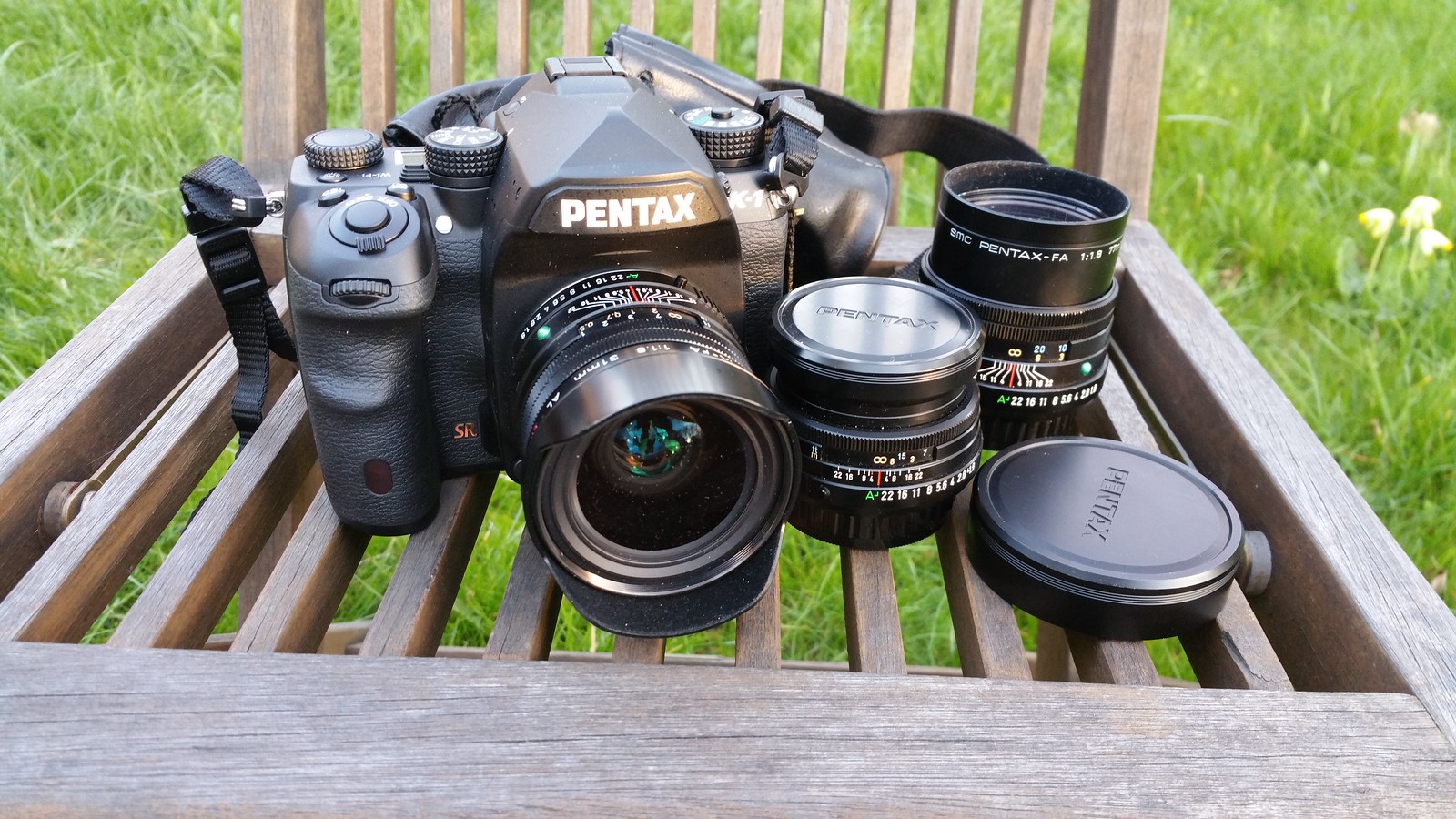
Searched through the shelves and cabinets today to gather all my full frame Pentax lenses with autofocus. Its logical to begin there. And the manual focus lenses are so many more. The picture collect all of them except for some Pentax-F lenses, and the Sigma lenses. So it is mostly FA lenses, except for the F fisheye zoom, my only FAJ and the DFA 100mm macro. Missing is also the DA 50mm...that should be a full frame despite the "DA". The K-1 is accompanied by my two best autofocus film boddies, the Z-1 and the MZ-S. So its a fully full frame team.
I've taken some first shots with about a third of the lenses today and yesterday. No formal tests yet...just shooting to get a feeling for the camera. Generally, the autofucus is very fast. It must be the largest step in autofocus speed since between the K-7 and the K-5 (going from K-3 to K-1). The camera is also a very fast shooter. Easilly end up shooting several more shots than intended when I press the shutter. Must learn to avoid that, considering the picture size, or I will ruin my self on the back up HDs. Must try some BIF with the K-1....and DIF (Dragonfly in flight).

It is wonder to see again how wide the lenses really are. Even 28mm is again a wide angle. The FA 20-35mm, and the FAJ 18-35mm gives vertigo in the short end. The normals are again normals, not portrait lenses. But I've kept shooting enough 35mm film to not have forgotten. The strange swiwel view screen comes out really handy for macro...and also for street shots! If the construction hold for field work, it can turn out a genious move by the designers. I'm trying to get used to the new third wheel....and trying to figure out the fast way between auto and manual ISO. Probably I should read the manual. ;)

Just a short on my Sigma lenses, since some have reported problems with Sigma lenses on the K-1. This is probably due to Sigmas habit of backward-engineer the communication scheme etc to each brand, and their habit of giving several different lenses the same model ID. But my copies of the Sigma 20mm f1.8 and the Sigma 180mm f3.5 macro 1:1 focus very well on the K-1. So do my ancient Sigma AF 400mm f5.6.


4 May 2016

Worth waiting for....

To paraphrase Carlsberg: Worth waiting for...
It was a long wait, but now is all forgotten, Pentax!


24 April 2014

A new toy...and what the mirror does afterwards

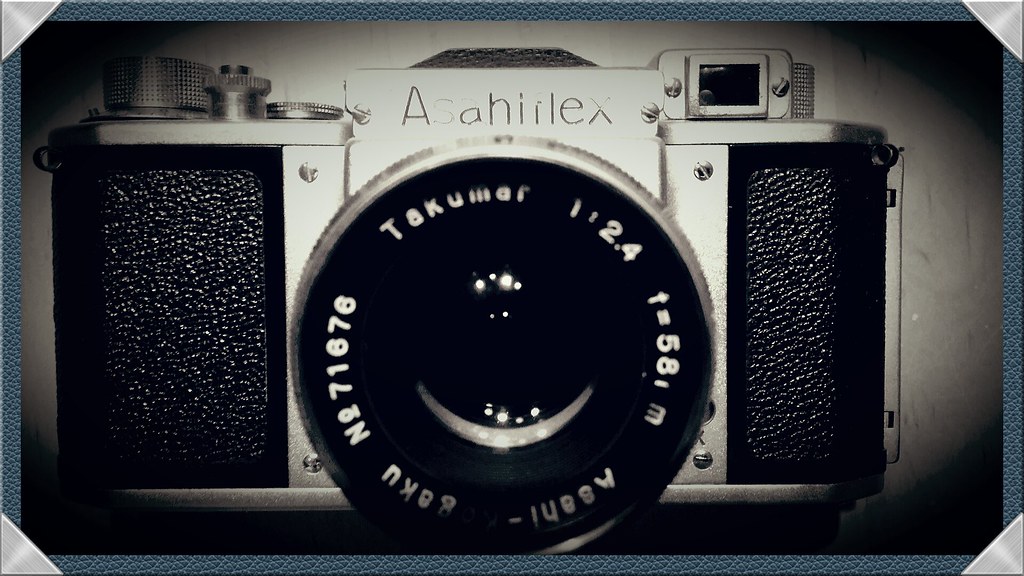
Asahiflex IIb with the Takumar f2.4 58mm lens.


I recently got hold of an Asahiflex IIb. I've wanted an Asahiflex for many years...and historically this may be the most significant one. I wanted to get a first hand impression of how it was to shoot with the ancestry cameras of the later Pentax SLRs. Always when I buy old cameras, it is not as much to collect them, as to get a first hand impression on how it was to use them, what the conditions was for past photographers. The first Asahiflex I from 1952 was the first single lens reflex (SLR) camera made in Japan. The owner of Asahi Optical Company (AOCo, later known as Pentax), Saburo Matsumoto, the niece of the AOCo founder Matsumoto Kajiwara, was stubornly aiming at producing a SLR camera rather than straight on copying pre-war German rangefinders like the Japanese camera giants back then (for example Konica, Canon, Nikon and Minolta). So far SLRs had several draw backs compared to rangefinders: focusing screens were not as bright, the mechanism was more complicated, and the mirror prevented wide-angle lenses from protruding into the camera body. It had however a great advantage compared to all other camera designs of the time: you saw the actual image that you were about to photograph, through the same lens as the picture would be taken,and you could focus, frame, and close down the lens based on that view. This is easy to forget in this age of digital cameras lacking optical viewfinders, just showing you the same image as the sensor captures live.
But up to 1955 the SLR had an aditional problem. When you shot, the viewfinder went black and stayed black because the mirror blocked the view. It stayed black until you forwarded the next frame, as the film crank action moved the mirror back to its original position. There were an early German Praktica camera where the mirror returned by itself, but not until you removed the finger from the shutter.
The man who deseigned the first Asahiflex was Nobuyuki Yoshida, whom then continued to work on solving the black-out of the SLRs. In 1954 came the Asahiflex IIb, with the first instant-return-mirror, the solution to the black-out-problem. A few years later came the Asahi Pentax (where "Pentax" was the name of that particular camera, not of the company or the brand), basically a Asahiflex IIb with a pentaprism and the m37 mount of the Asahiflexes replaced with an m42 mount. History was made, and within a few years the whole camera industry followed. Late-commers like Canon almost went broke for staying too long with rangefinders, and we entered the age when AOCo/Pentax sold more cameras than Canon and Nikon combined. In 1960 the Japanese Science and Technology Agency Directors Award was given to Mr. Yoshida and Mr. Matsumoto for the instant return mirror design.
Full page advertisement in Popular Photography in 1955 for the Asahiflex IIa, which shared the instant return mirror with the IIb, but was released a year later.
The lens on my Asahiflex is the more expensive normal lens alternative sold with the Asahiflexes: the Takumar f2.4 58mm, a Heliar type lens design with an extra cemented front element (making it a 5:3). Frank Mechelhoff believes it to be the fastest Heliar normal lens ever made. The name of the AOCo lenses (Takumar) are cause to some missunderstandings on the web. It comes from the younger brother of the AOCo founder, Takuma Kajiwara, who had left Japan when he was young and made a career as a portrait photographer and eventually also as a painter. So far, most web-sources have it right. What they miss is that this is also a name-game (from what I understand, the Jap's love when a word has more than one meaning). "Takuma" also means "grind" or "polish", as when you grind the glass to form a lens element, or when you polish the lens. The source to this is Takuma Kajiwara himself in an interview you can read on Pentax Forum where I've written much more on my research about Takuma Kajiwara: who was Takuma Kajiwara. Some web sources get it wrong when they claim that Takuma Kajiwara designed the early Takumar lenses. That honour goes instead to Mr. Ryohei Suzuki, the third member of the "Pentax-three" (Matsumoto, Yoshida and Suzuki). There is however signs that Takuma Kajiwara acted as sort of mentor (or older relative with insigts in the U.S. photography market) to his nephew Saburo Matsumoto, from when he spent more than a year in Japan in 1938-1939 after Matsumoto took over the familly company, to the 1950's when he helped promote the Asahiflex in the US. This in combination with the unresistable word-game I believe is enough explanation to why Matsumoto named the lenses "Takumar" (and it clearly wouldn't have worked to name them "Suzuki" after the lens designer when there were already a big Japanese company with that name).

I've got a roll of Ilford XP2 in the Asahiflex now to test it out, but mechanically everything seams to work as it is meant to. But I have not been able to resist putting the lens on my Pentax K-5 (using a m37-m42 adapter in combination with a m42-K mount adapter), all wide open, see below.

Finally, in case some reader have got an idea how to explain this: When AOCo went with a 37mm screw mount they took a very individualistic choice. No one else made cameras with that mount, and there were ever very few 3rd party manufacturers of m37 lenses. With the Asahi Pentax they changed to the 42 mm screw mount of Contax/Praktica, which was a sort of main stream choice (with the m42 mount and the exakta mounts being the only larger established SLR mounts). OK, that makes sence...they realised that there was good arguments for joining an excisting standard. But why is it that they use the same registration distance for the Asahiflex and the m37 lenses as did Zeiss/Contax/Praktica for the m42 mount (45.46mm)? They could have ended up with any registration distance between 40 and 50mm if they had been as independent in their choice as they were with the mount itself. This is somewhat of a mystery to me.

Test shots with the Takumar f2.4 58mm m37 on the Pentax K-5, all at f2.4:


10 September 2013

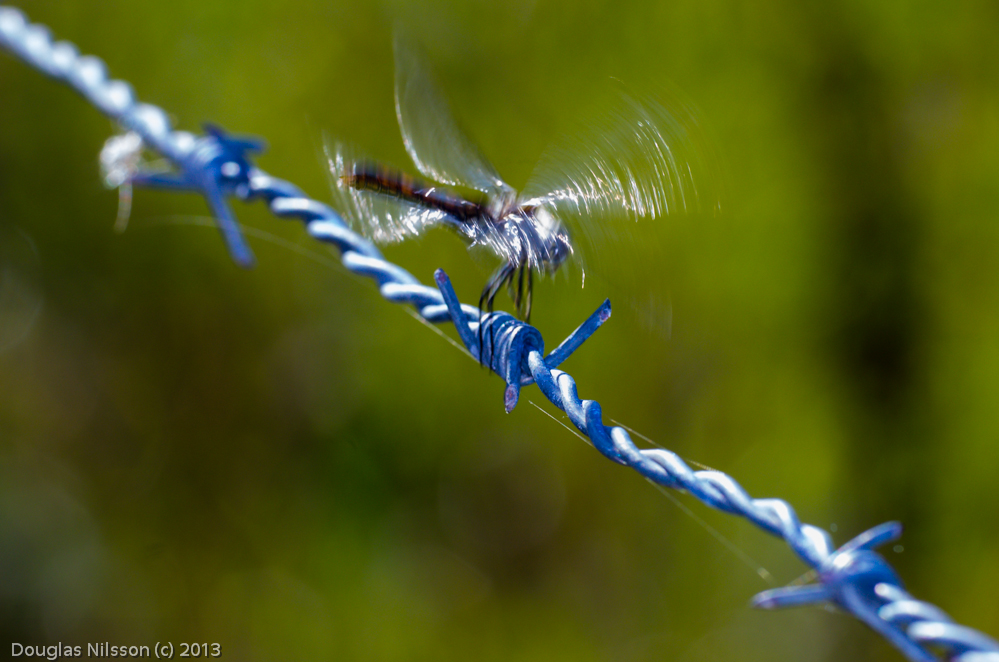
Dragon fly on barbed wire

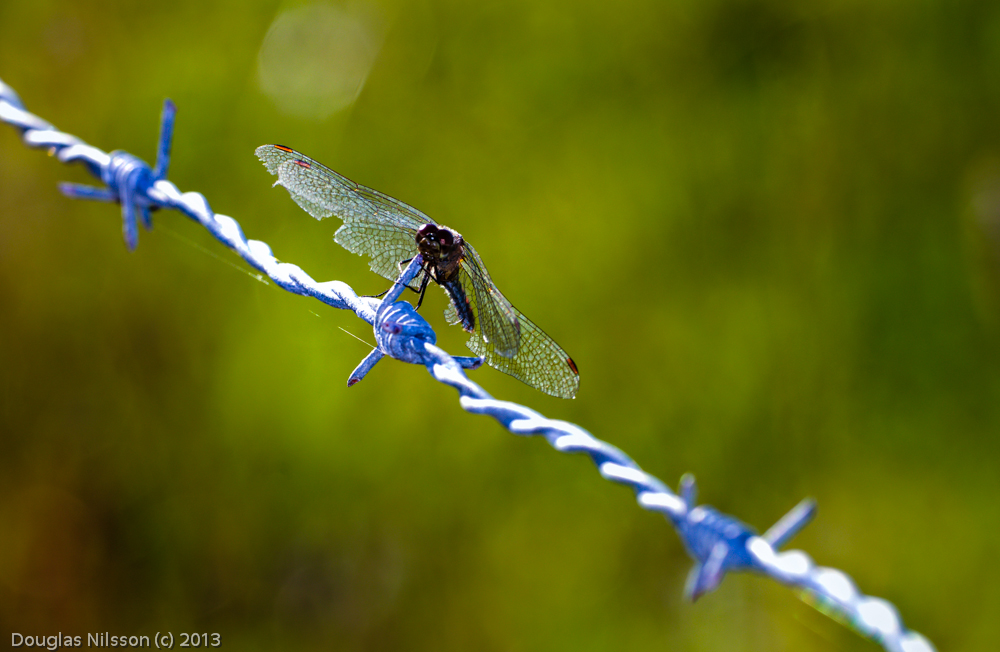
Still trying to learn how to catch a dragon fly in the air with the camera. Not there yet... Not with this shot either. It still got its feet on the wire, but I like it anyway. Sort of artsy. They are damn fast bastards. This is how much one move in 1/180's of a second. For the first time I begin to understand those who demand higher flash sync from Pentax. But it is a step forward. Usually I sneak up to the dragon fly, and in the lucky coincidence that it doesn't go chicken and escape, I snap a couple of shots, at least some of them sharp, of a sitting dragon fly, like the next picture. Then I wait for it to fly...and when it does, I fire of as fast as I can. Usually resulting in an empty frame, or perhaps a bit of the dragon fly inside the frame and the rest outside.


7 September 2013

One of the last days of summer

Finally I had some time to play again with the NX 20 and some manual lenses on adapters. Or more precisely, I stool the time by carrying the camera on the campus during lunch. Here is a Nikon Nikkor-H Auto 50mm f2, which I got so cheap recently that I'm almost ashamed. Build quality is great (in black and chrome like most old Nikon). It is a pre-AI, so it actually mount on my Pentax cameras as well (maybe you didn't know that, but Nikon lenses can be mounted on Pentax cameras upside down, the pre-AI even lock), so I think I will have a lot of fun with this one. This is shot at f2. Two members of the Science student club having lunch (you can see it on the T-shirt). They had picked a perfect spot in the shadow.
Here is a shot with the Nikon Nikkor-H Auto 85mm f1.8, same vintage as the 50mm. At f1.8. I know, it looks like I'm a creep that were hiding in the bushes to shoot this young lady, but I'm not. I was having my lunch at another table identical to the one she sit at, and she saw me shooting her, and she didn't run away ;) What I played with here was to have both front and back bokeh in the same image. It renders quite nicely from this lens. Supposedly these early Nikon lenses where designed for a maxiam center sharpness, with soft corners as a trade off, because that is how the press-photographers wanted it. If you know how they copied 9 out of 10 news images back then, it makes sense. Black and white with extra exposure to darken everything around the person in the center of the images, so that the reader would look at the important part. It worked then in black and white news papers. But I think that I would need to shoot brick walls to really see that the corners are any softer than the center, and I may need full frame. On a APS-C sensor the worst is cropped. These pre-AI lenses has been going up in price. Nikon people generally don't want them, since only the most expensive Nikon models can meeter with them, but now they are getting popular due to all the different mirror-less cameras and all these little adapters. I can see why. Think I need to get some more pre-AI Nikkors...
The last lens in my pockets that sunny September day was the Pentacon Prakticar MC 50mm f1.8. This is a cheapish fast 50 in the Praktica PB mount from the 1980's. Finally Praktica abandoned the m42 mount and made their own bayonet, which includes both mechanical controle and three electrical contacts. Strangely they never added and program exposure functions or exposure time priority on their cameras, just aperture priority. Compared to the Nikkors this lens feels very plastic, although there is some metal in it. The mount is some light metal, Zn perhaps, that scratch easily. If the Nikkors don't focus as smooth as the typical Takumar, they are still a pleasure to work with. But this lens is stiff, and the resistance change over the focus interval. Not good. But optically, the lens does a decent job. Now, I didn't get the PB adapter for these sort of lenses, but to use some of the Zeiss labeled glass that can be found in this mount... Btw, if the students look too young, it is because some hundreds Gymnasie-students (like 18-19 years old) visited the University this day.
The Pentacon 50mm again. I don't think the guys were students at all, but doing some construction work on the Campus, and they just found a perfect spot for a break.
And outside the subway-station, Harry Hole was waiting for someone. Watching for some Norwegian criminals? At least this is how I have always imagined him.

Enhanced by Zemanta

15 August 2013

B.I.F. - Bug In Flight

I think BIF originally means Bird In Flight, to capture a flying bird on photo. But catching a flying bug is just as difficult. Probably dragonflies are worst followed by butterflies. But the summer is already so late here that they are rare...so I'm practicing on hover flies.
Getting the bug inside the image frame and relatively sharp is difficult in itself. Then one have to plan composition and keep an eye on the background, preferably giving it a smooth bokeh in colors that contrast against the bug.
These images are taken with the Sigma 180mm macro and Pentax macro flash. For each shot I have of course erased many with the bug outside the DOF or even outside the image frame...but I am getting better.

12 August 2013

Metalic green fly

Most flies here are just black and boring, but sometimes I find these more photogenetic ones.

10 August 2013

If you were a 2 mm bug

If you were a bug just 2mm large, even a tiny flower is a whole world. I recon it is good to be a bit bigger than this. Yet, if it would fall from the flower, it would still survive. I would not survive a proportional fall. On the other hand, there are less things out there that may eat me...

Playing with a new macro lens in my own garden. Before it started to rain.


26 June 2013

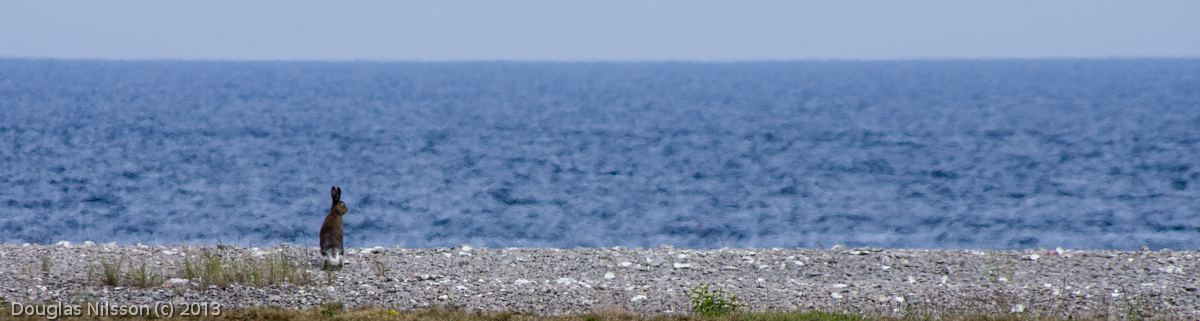
The hare and the sea (Haren och Havet)

The hare looked at the sea:
that blue flat is so large,
I can not eat it,
I can not drink it,
I can not run on it.
What is it for?


3 June 2013

KONICA HEXANON 85mm f1.8 ON THE SAMSUNG

With the crop factor this is more like carrying a 135mm lens, so it is a little bit long for portrait, but can be used as such, and for street shooting this is a great focal length. None of these shots are wide open however, I will have to come back to that.

Early morning in the University city of Lund, Sweden.


A man and his pipe...


2 June 2013

Konica Hexanon AR 24mm f2.8 on the Samsung NX20

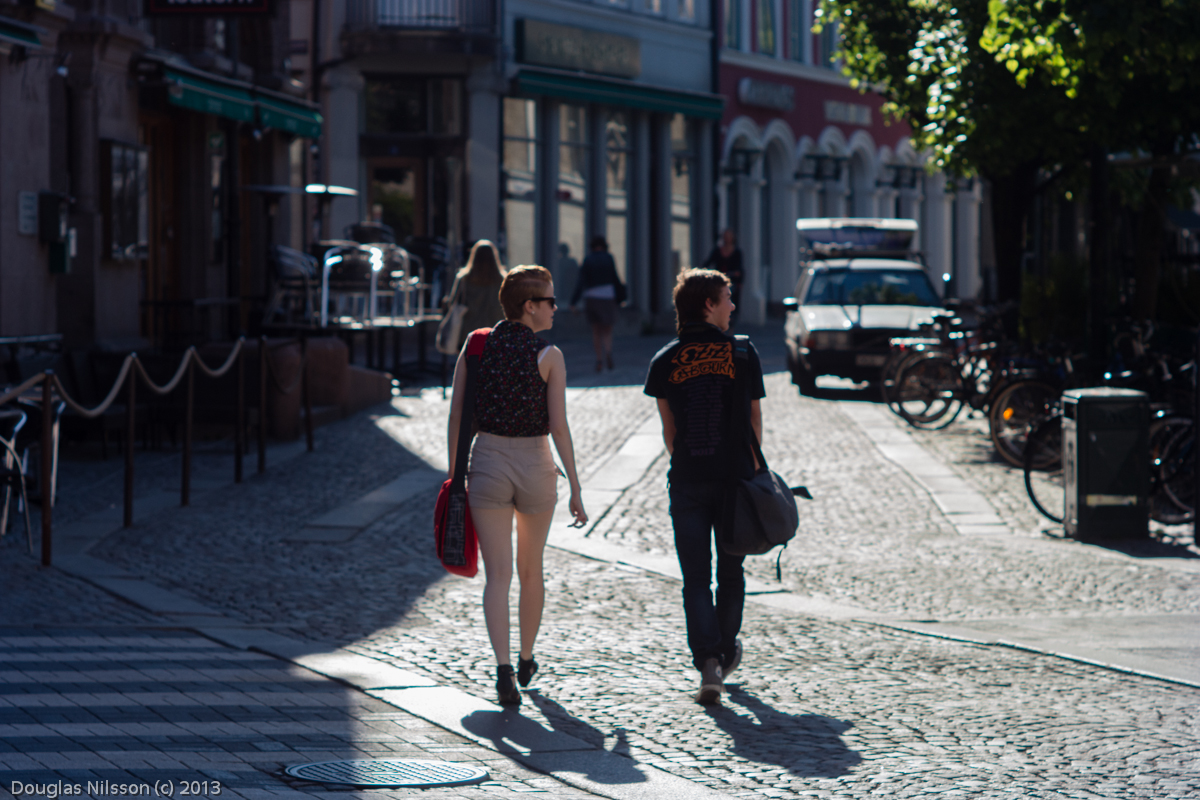
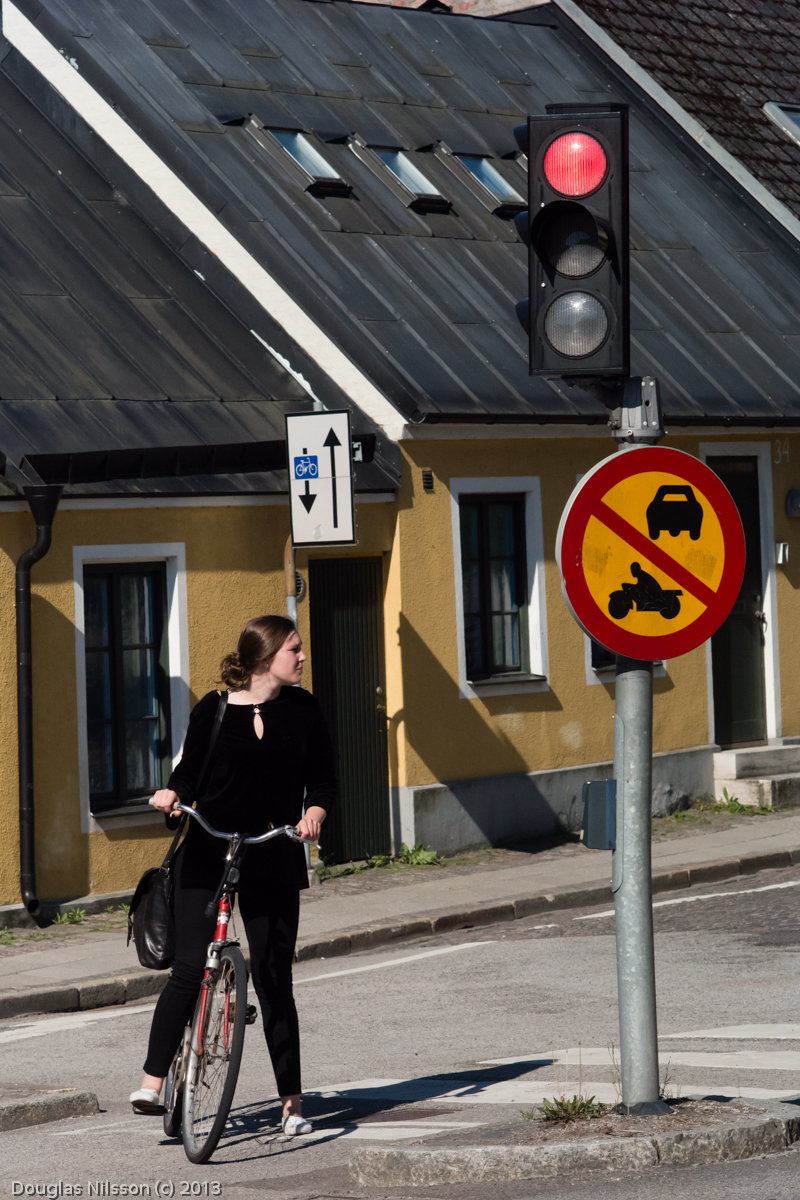
Not surprisingly this turned out to be the most easily used street lens, as it corresponds to about 35mm focal length on a 24x36mm film camera, and comes with a deep depth of focus. I mostly put it to f8 or f11 and set the focus distance to 2m and everything between 1m and infinity should be sharp. Having read the camera manual on the train and discovered that I should be able to shoot in aperture priority, the combination now turned out to be a good snap-shooting camera. Of course, this isn't real "aperture priority", since I'm meeting closed down, but on the other hand, the electronic view finder does not go dark as the optical viewfinder does in a similar situation (like when shooting with m42 lenses on a Pentax DSLR). That is one point to the EVIL Samsung relative to the DSLR Pentaxes (or any DSLR actually). Here are now some examples from central Lund (old University city in southern Sweden):

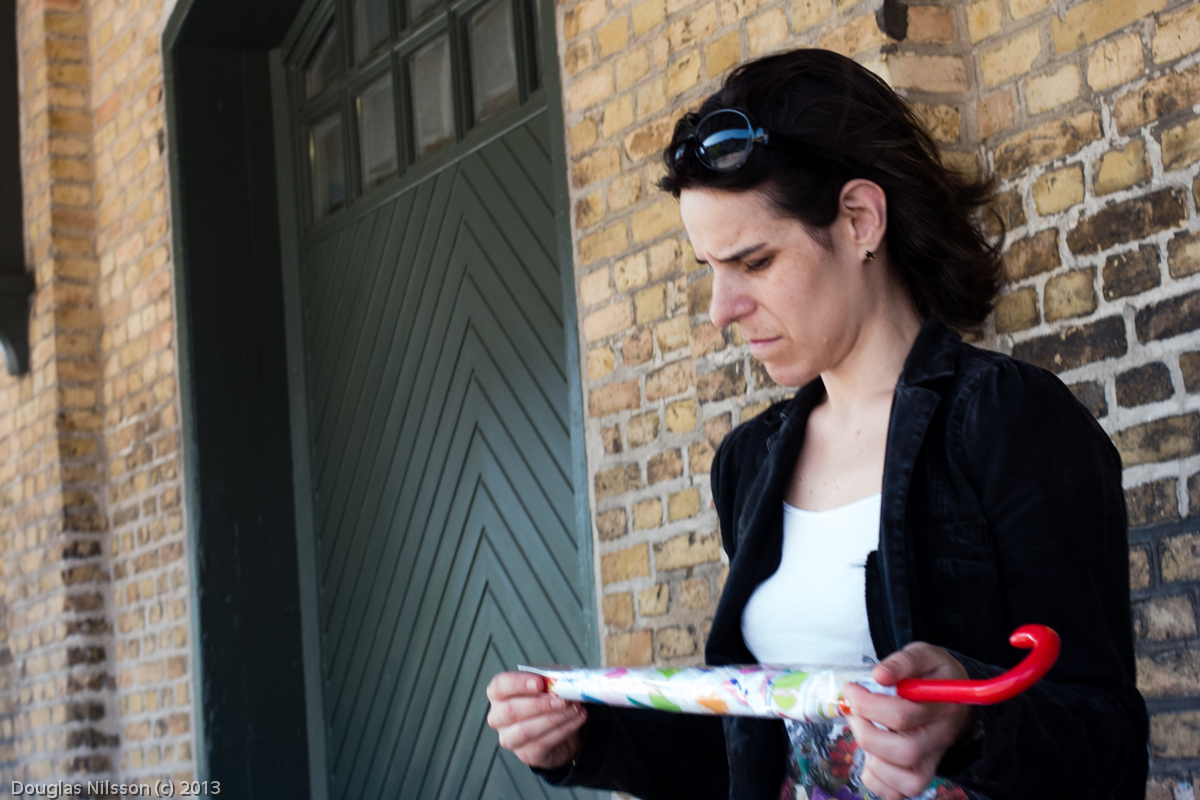
"I should have brought the manual!"
When shooting from the hip I occasionally missed the image stabilization of Pentax DSLRs. Here is an example of slight motion blur. Can't understand why Samsung didn't go for an in-body image stabilization for the NX cameras. Couldn't they just have bought patents from Pentax or Olympus?


31 May 2013

Low light/high ISO performance of the Samsung NX20

As mentioned, I've realized quite soon that I had got spoiled by shooting with the Pentax K-5. Samsung NX is very far from the K-5 standard at high ISO. Now, the Samsing NX20 of course has a Samsung sensor. One that is presumably related to the Samsung sensor in the Pentax K20D and the Pentax K-7. Not exactly the same, but certainly related, perhaps like a niece or so ;)
People has claimed that they continued to improve the video functions since the K-7. I haven't tried that yet. I was hoping that they had also tweaked and improved other properties of the sensor. But my impression is that the K-7 does better, though I need to make a side by side comparison on the same motif, in the same light. It comes down to the nature of the noise. There is something with the NX20 noise at high ISO that I don't like!

Crop showing noise at ISO 6400 from the following photo.

Baristas at Stockholm Central Railwaystation. Uggly noise and even some banding :(


A more pleasing shot at ISO 6400 from the Stockholm sub-way yesterday. But then of course, there is more light in this shot, and high ISO always looks better when there is plenty of light, and then one could perhaps have shot it at lower ISO? Both shots were with the Konica Hexanon 40mm f1.8.

Konica Hexanon AR 40mm f1.8 on the Samsung NX20

Here are a few examples of the Konica Hexanon AR 40mm f1.8 "pancake" on the Samsung NX20. Even though it isn't really "pancake" with the adapter included, it is by far the most compact combination you get from a Konica AR+adapter. On an APS-C sensor this is a somewhat narrow angled normal lens. That means that it is still fully do-able to shoot with it from the hip. This is a nice street combination.
This lens has got a bit of cult-status among EVIL people, in particular among 4/3rd shooters, for whom it offers an ideal portrait focal length at f1.8. It is probably because its own compact size and the short registration distance of the Konica AR system (which keep down the size of the adapters) and the resulting combined compact size, and a fairly good optical performance. I remember it was a tad soft at f1.8 (but still sharper than the SMC Pentax-M 40mm f2.8 pancake at f2.8) on film. I will test it wide open on digital later on. Anyway, its popularity among EVIL photographers has done strange things with the price. Before the mirrorless sytem cameras came, this lens could not be used on any digital camera, and hence you could buy them for 5 Euros (as they were sold as the default standard lens for several years it was made in large numbers). Now people pay up to 50 Euros. Had I known I would have bought everyone I could get hold of for 5 Euros, and now sold them for 50. Certainly would beet the stock exchange market!

She had a very nicely articulated "hand-language".

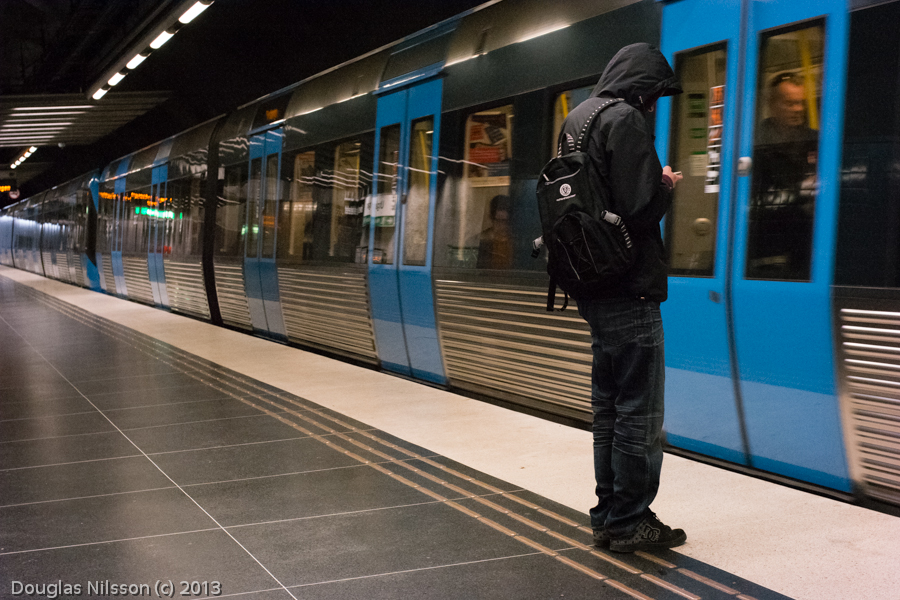
Mmh, is that my train?


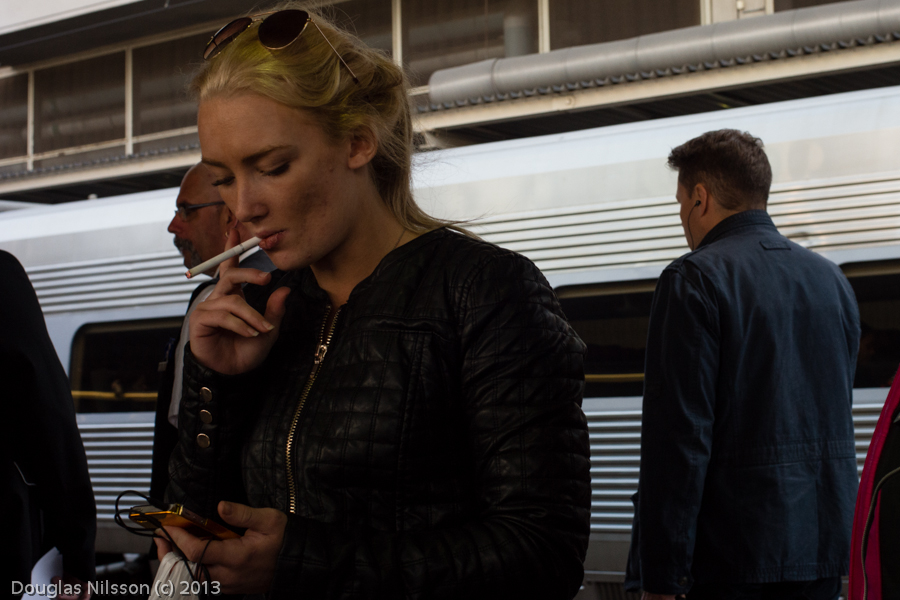
A smoke and facebook, what more can you want? Why is it that smoking looks so much better on photo than in reality. And it doesn't smell on photo as well!


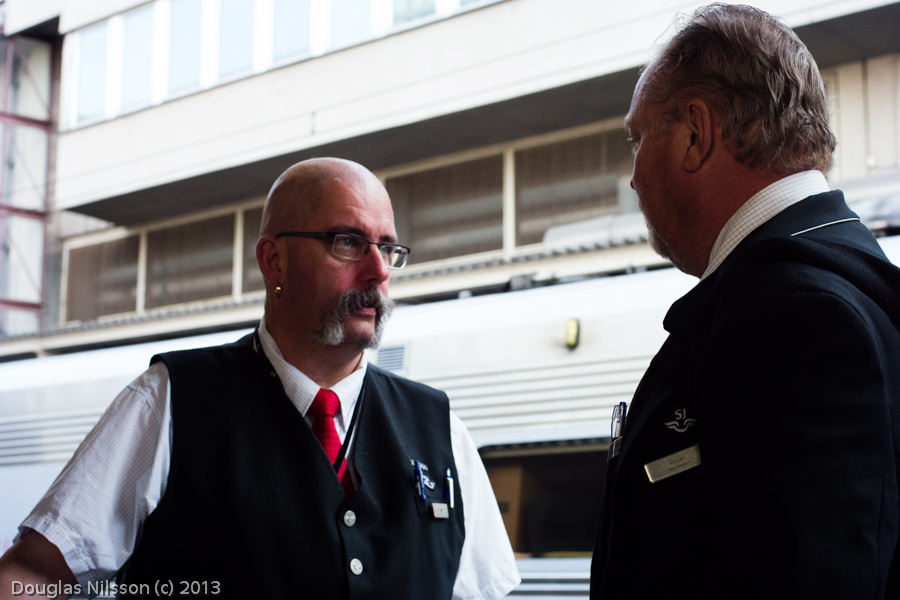
Final professional chat before departure. That conductor had a very impressive moustache! I didn't quite nail the focus here on the moustache guy, so I have applied a little bit of sharpening. Otherwise, unless I say something else, the only thing I've done with these photos are to adjust exposure (remember I shoot manual), and sometimes increased the contrast, or when needed for the composition, cropped. The aperture on these train-station shots varied between f5.6 and f11.


A group of Chinese business gentlemen (?) were heading the other direction. Several Nikon cameras in that group.


PentaxForums.com