Showing posts with label bokeh. Show all posts

13 May 2016

A match made in heaven

Among my many camera lenses I've owned or used, there is one lens that stands out as nearly impossibly good. Devine.

The 7:6 lens diagram designed by Mr. Yasunori Arai.


It was developed at Asahi Optical Company (aka Pentax) by Mr. Yasunori Arai and a few days ago it was 32 years since the final design patent passed: the SMC Pentax-A* 135mm f1.8. Mr Yasunori also designed the big gun SMC Pentax-A* 1200mm f8 ED IF. Judging from patents, he spent a great deal of his time working on Pentax astronomical lenses, especially how to minimize chromatic aberration in them. Perhaps this is why the A*135/1.8 does so well in that regard. If any reader knows more about Mr. Yasunori, or even have a photo of him for my page of Pentax lens designers, I would be most obliged.

The Super-A camera came in 1984, and with that the A serie of Pentax lenses, which is perhaps the most ambitious of their lens lines. I got my Super A in 1984, but it would take almost a decade before my copy of the A*135/1.8 found a home with me. By then autofocus had arrived and "destroyed" photography for ever. Seamingly intelligent persons sold of their excellent manual lenses to afford often mediocre autofocus lenses. To my benefit.

I was making one of my usuals tours on the streets of Stockholm shooting people, when I came by the camera shop "Sergel foto" andout of habit, I took a look in the window with second hand gear, and my eye cought the sight of an exceptionally fat lens. I entered, and asked the staff to let me take a look at that lens.

Probably I had been given a broshure with Pentax complete lens line when I bought the Super A, but lenses like this had never entered my plans to own. The weight. All that glass! The impossibly large front lense and gigantic apperture opening that appeared to suck in light... They were asking for 3500 Swedisk kronor, a fraction of its price as new. Still a lot of money for a graduate student, but I had recently got a 5 year position with a real salary and had some savings from pictures I've sold.... I had to have it. I could eat porridge and onion soup for a month!

I never regretted that.

I've shot a lot of film through that lens. Streetshooting, theater and conserts....weddings. Eventually I came to use it on my digital Pentax SLRs, but these were cropped sensors, and while it is an exelent and very fast 200mm eqiivalent on APS-C, it was a pitty I could not use its full image other than on film.

1984 meets 2016 thanks to Pentax backward compatibility.

 Then came finally Pentax with a full frame DSLR. And of course the A*135/1.8 was on the priority list to try out on the new Pentax K-1. I don't think a viewfinder has looked this bright since I used the same lens on my Super-A. So far I've only had the camera about a week...but here is some first samples shot in our garden with the A*135/1.8.

Cow lips at f1.8.

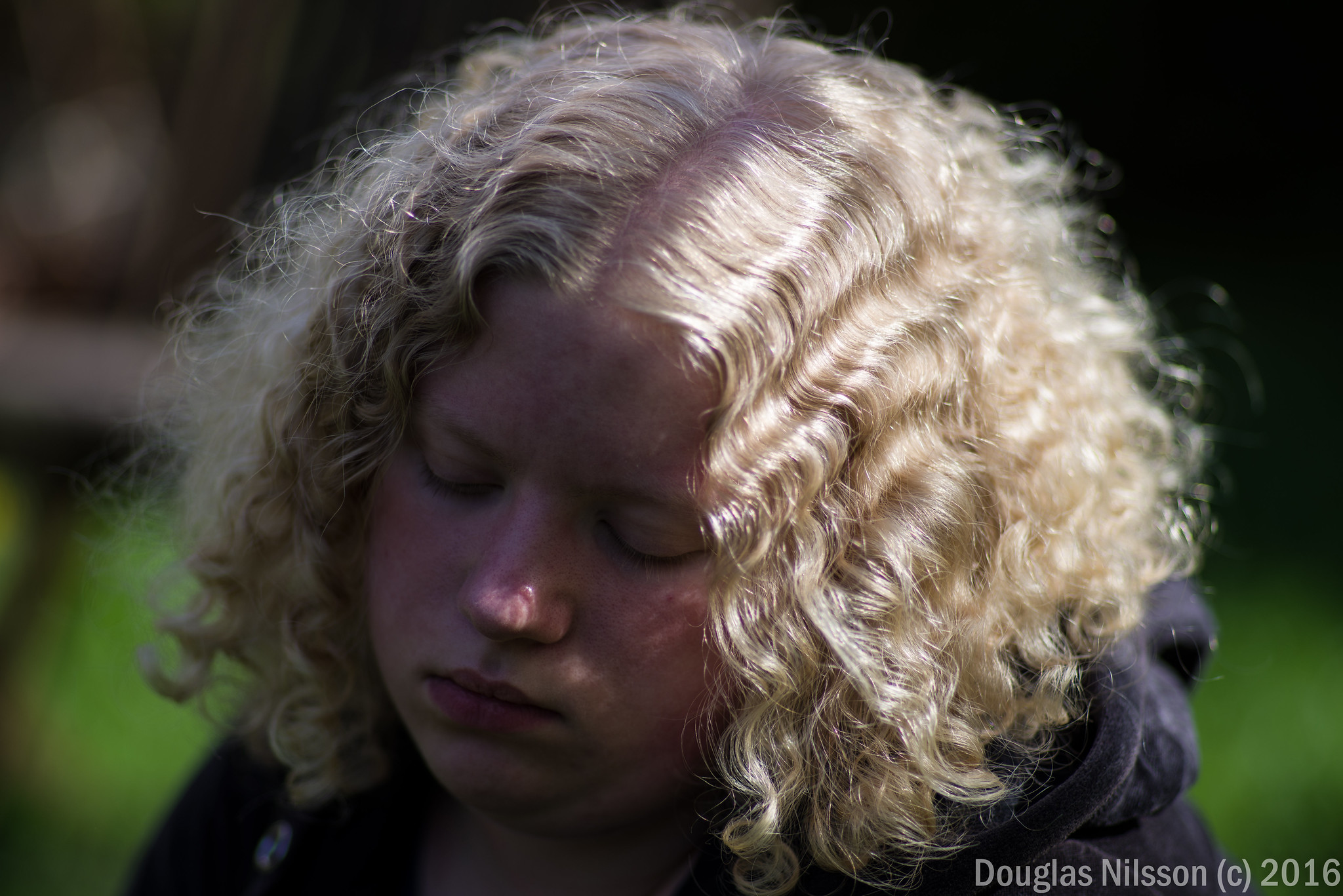
Goldilocks in deep thoughts. f1.8.

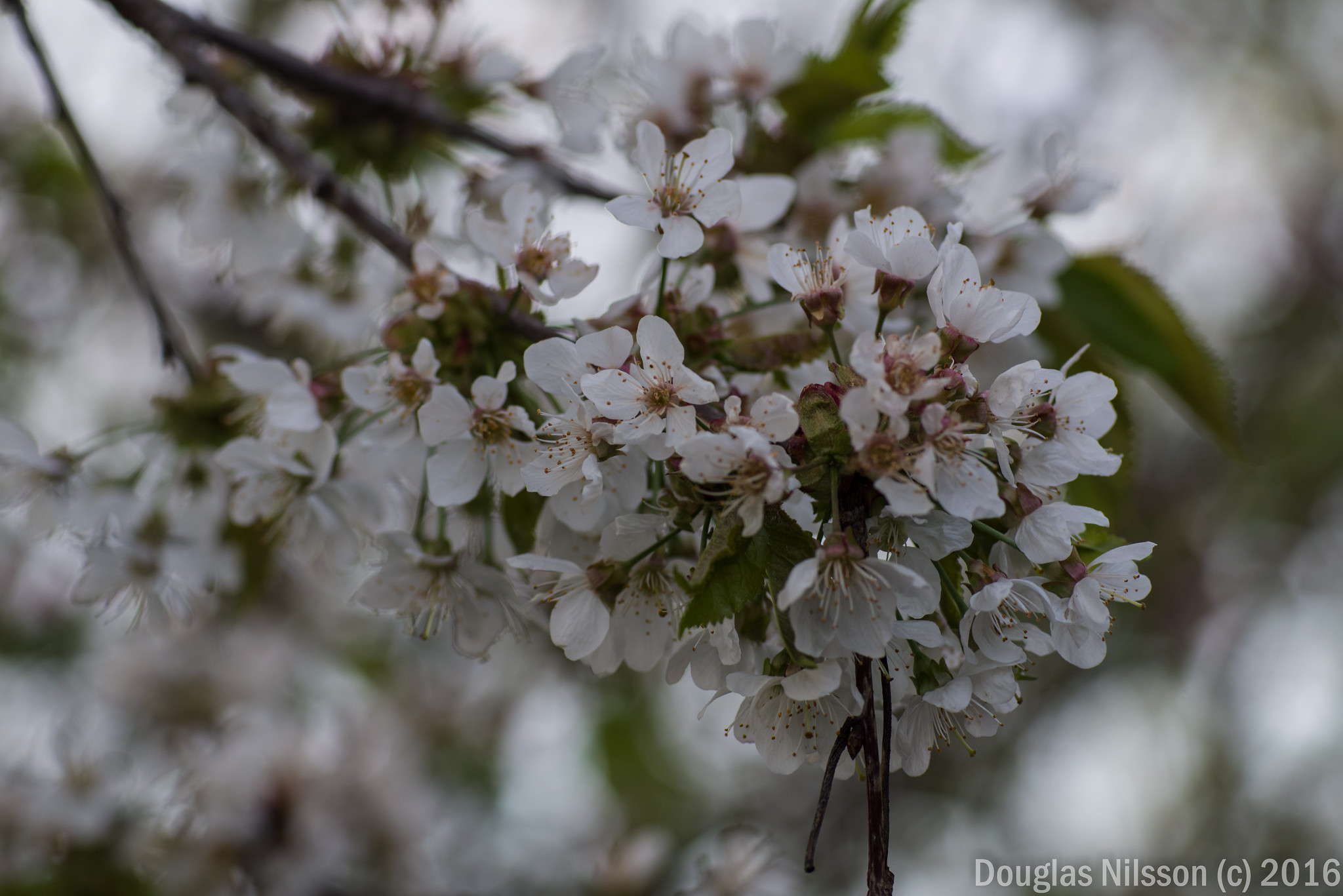
Cherry flowers at f4.

Cherry flowers at f2.8.
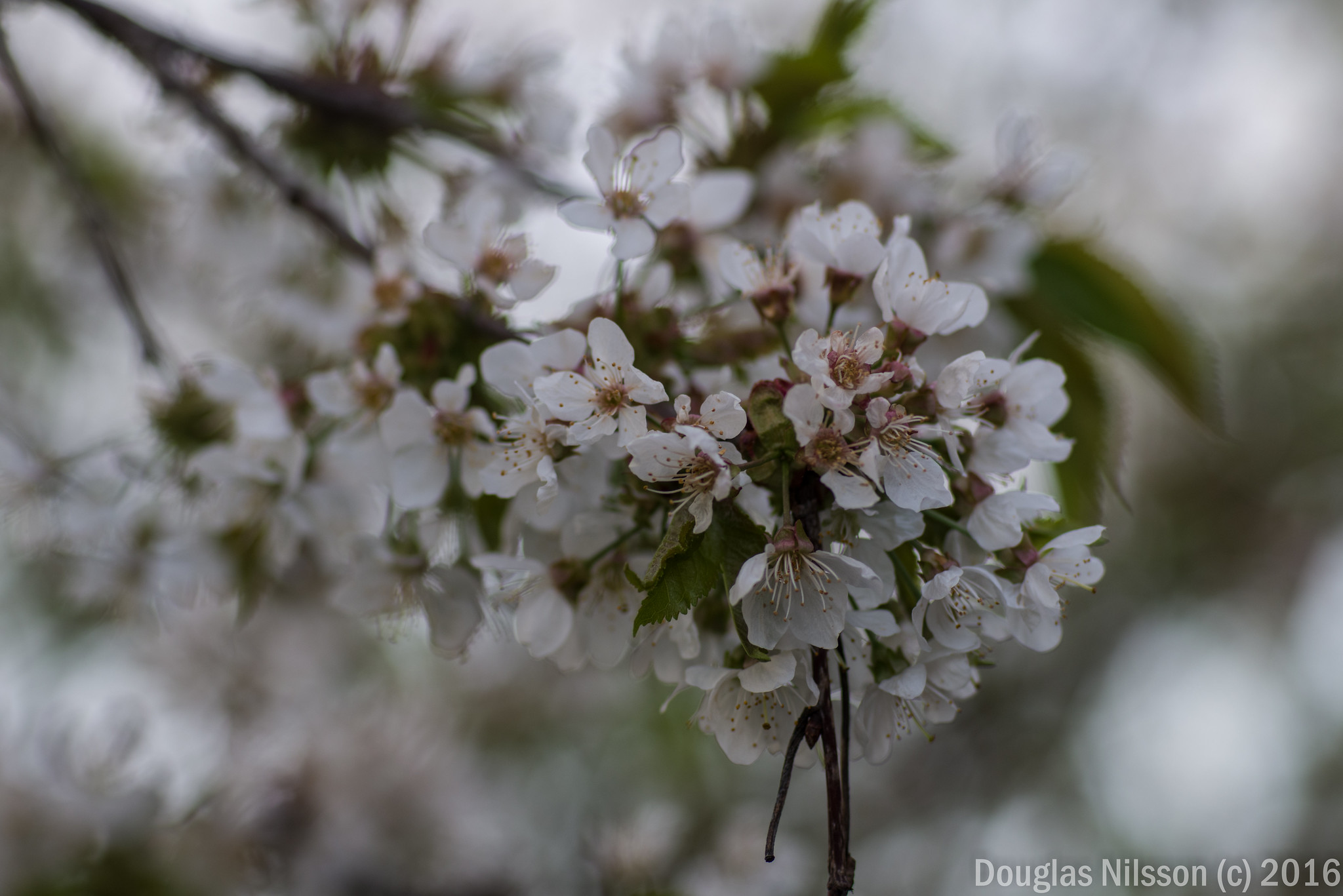
Cherry flowers at f1.8.

I just love the colours and the buttery smooth bokeh of this lens. But the most unusual thing about it is that it stays sharp even wide open. Most really fast lenses becomes soft wide open This applies for example to most 50/1.2, 85/1.4, 135/1.8 or 135/2 by all lens makers. It appears more or less to be a natural law. But the A*135/1.8 stays sharp wide open. Yes, the out of focus areas are soft, as they should be, and at f1.8 these are large as the depth of focus becomes very thin. But if you zoom in, you will see that areas that are still within the DOF remain razor sharp. Look at my daughters hair for example!

The three cherry flowers pictures illustrates how the bokeh change when the apperture change. At f4 it is still quite bussy with smeared details. At f1.8 the whole background is smooth. This one can of course use to control the character of the image.

Today the lens is worth about 2000 Euro. The time is over when we look down on great optics just because of its manual focus. So even as an investment it was a good buy. The price of course reflects the quality of the lens, but also its scarsity. Presumably, only about 800 civilian copies were produced for the whole global market, plus a small number of camouflaged coloured copies for the Japanese self defence forces.


7 September 2013

One of the last days of summer

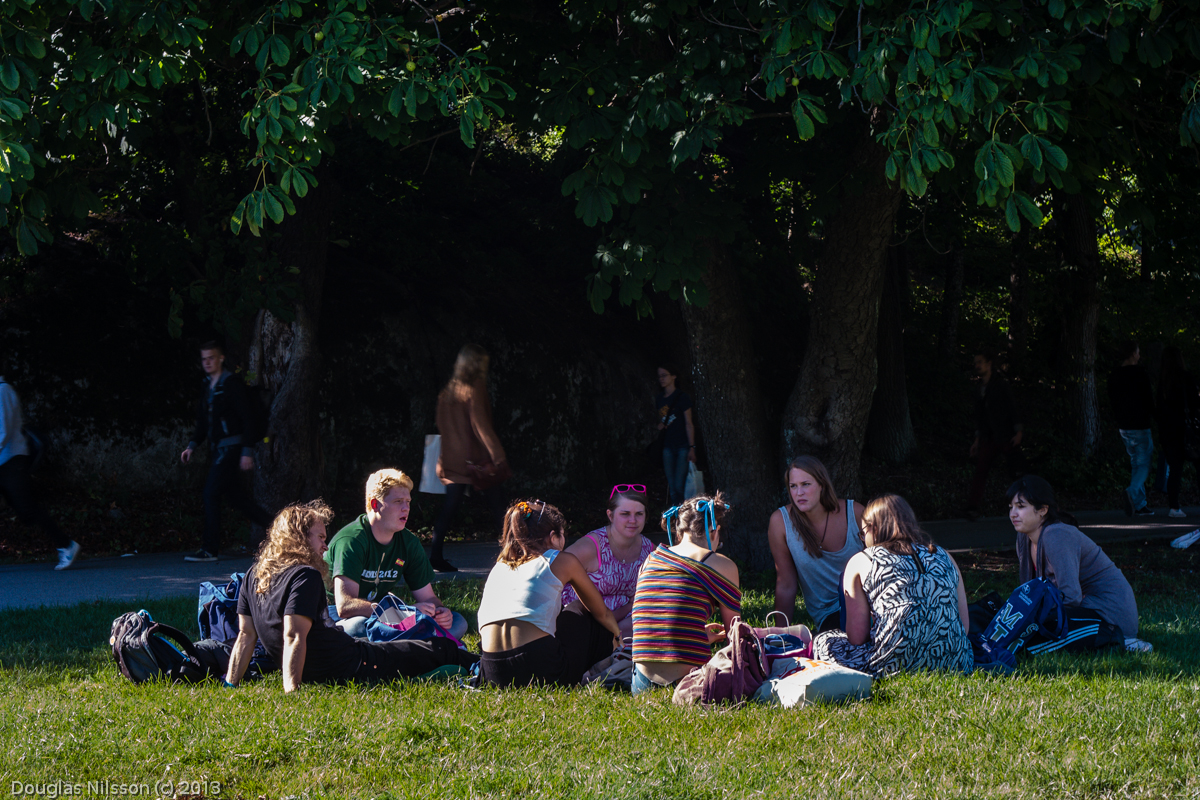
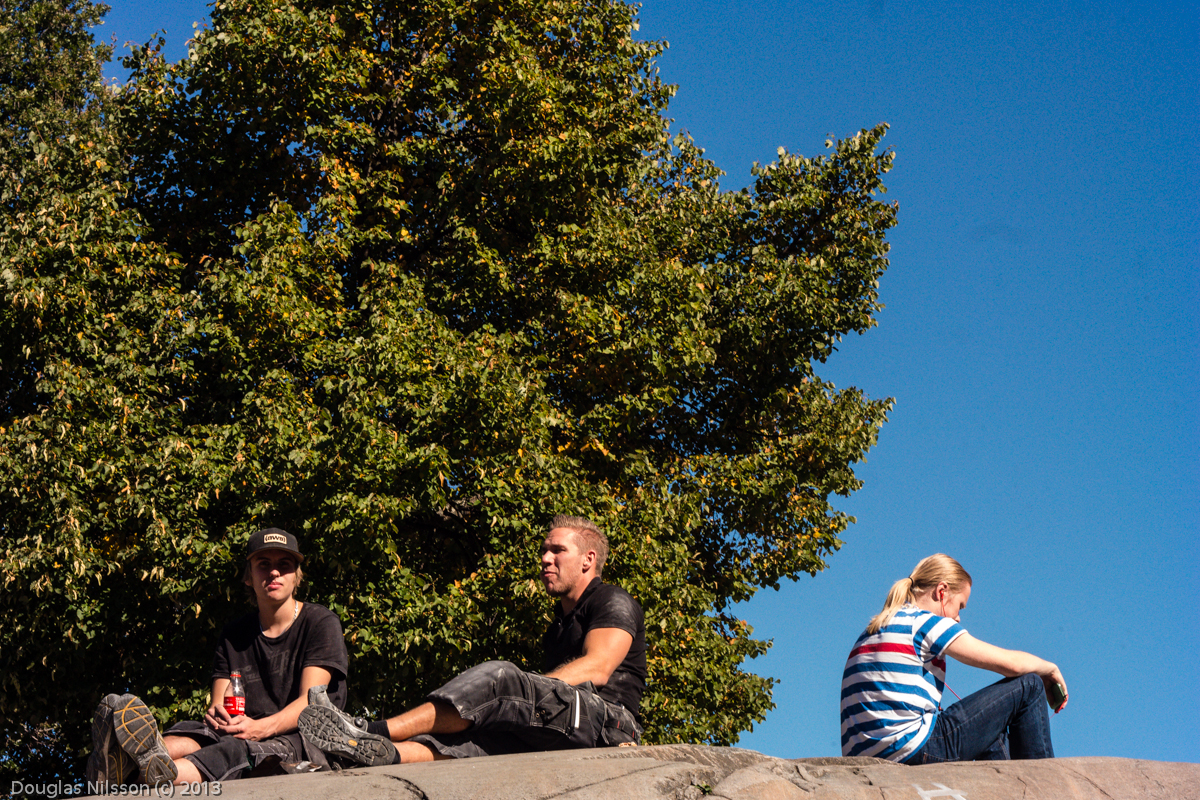
Finally I had some time to play again with the NX 20 and some manual lenses on adapters. Or more precisely, I stool the time by carrying the camera on the campus during lunch. Here is a Nikon Nikkor-H Auto 50mm f2, which I got so cheap recently that I'm almost ashamed. Build quality is great (in black and chrome like most old Nikon). It is a pre-AI, so it actually mount on my Pentax cameras as well (maybe you didn't know that, but Nikon lenses can be mounted on Pentax cameras upside down, the pre-AI even lock), so I think I will have a lot of fun with this one. This is shot at f2. Two members of the Science student club having lunch (you can see it on the T-shirt). They had picked a perfect spot in the shadow.
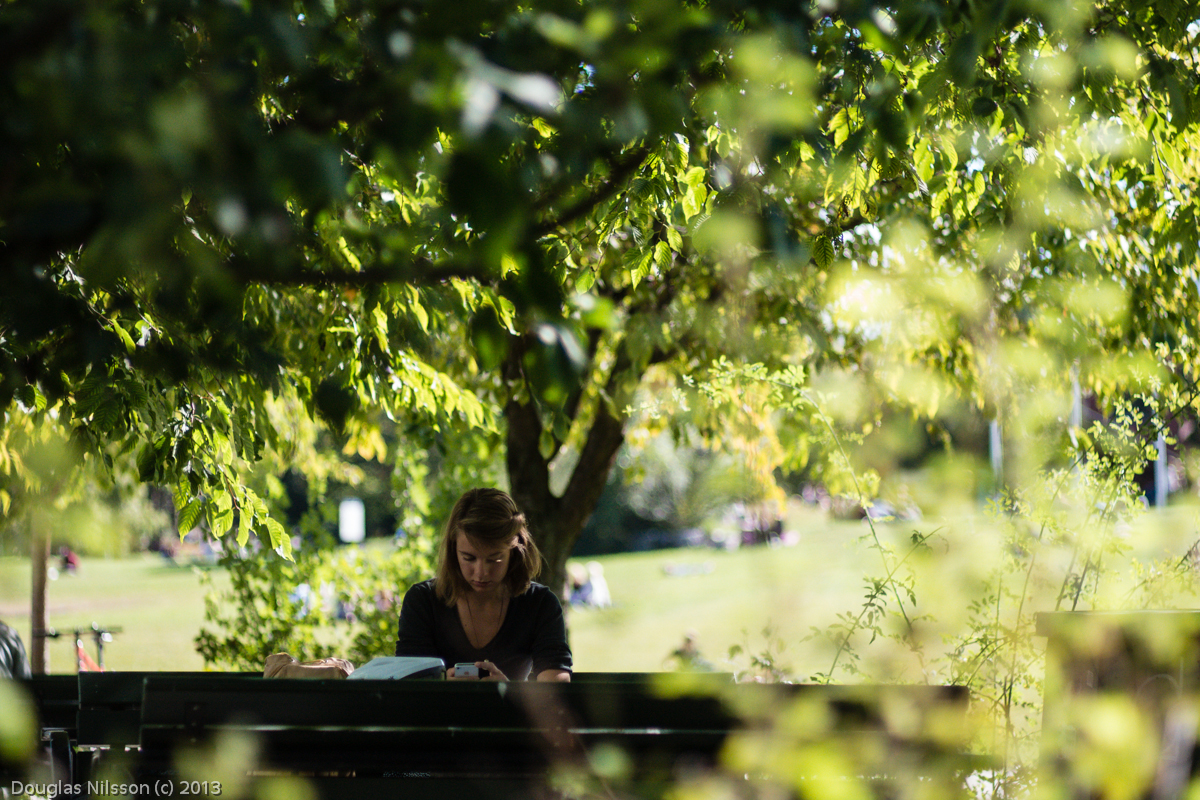
Here is a shot with the Nikon Nikkor-H Auto 85mm f1.8, same vintage as the 50mm. At f1.8. I know, it looks like I'm a creep that were hiding in the bushes to shoot this young lady, but I'm not. I was having my lunch at another table identical to the one she sit at, and she saw me shooting her, and she didn't run away ;) What I played with here was to have both front and back bokeh in the same image. It renders quite nicely from this lens. Supposedly these early Nikon lenses where designed for a maxiam center sharpness, with soft corners as a trade off, because that is how the press-photographers wanted it. If you know how they copied 9 out of 10 news images back then, it makes sense. Black and white with extra exposure to darken everything around the person in the center of the images, so that the reader would look at the important part. It worked then in black and white news papers. But I think that I would need to shoot brick walls to really see that the corners are any softer than the center, and I may need full frame. On a APS-C sensor the worst is cropped. These pre-AI lenses has been going up in price. Nikon people generally don't want them, since only the most expensive Nikon models can meeter with them, but now they are getting popular due to all the different mirror-less cameras and all these little adapters. I can see why. Think I need to get some more pre-AI Nikkors...
The last lens in my pockets that sunny September day was the Pentacon Prakticar MC 50mm f1.8. This is a cheapish fast 50 in the Praktica PB mount from the 1980's. Finally Praktica abandoned the m42 mount and made their own bayonet, which includes both mechanical controle and three electrical contacts. Strangely they never added and program exposure functions or exposure time priority on their cameras, just aperture priority. Compared to the Nikkors this lens feels very plastic, although there is some metal in it. The mount is some light metal, Zn perhaps, that scratch easily. If the Nikkors don't focus as smooth as the typical Takumar, they are still a pleasure to work with. But this lens is stiff, and the resistance change over the focus interval. Not good. But optically, the lens does a decent job. Now, I didn't get the PB adapter for these sort of lenses, but to use some of the Zeiss labeled glass that can be found in this mount... Btw, if the students look too young, it is because some hundreds Gymnasie-students (like 18-19 years old) visited the University this day.
The Pentacon 50mm again. I don't think the guys were students at all, but doing some construction work on the Campus, and they just found a perfect spot for a break.
And outside the subway-station, Harry Hole was waiting for someone. Watching for some Norwegian criminals? At least this is how I have always imagined him.

Enhanced by Zemanta

15 August 2013

B.I.F. - Bug In Flight

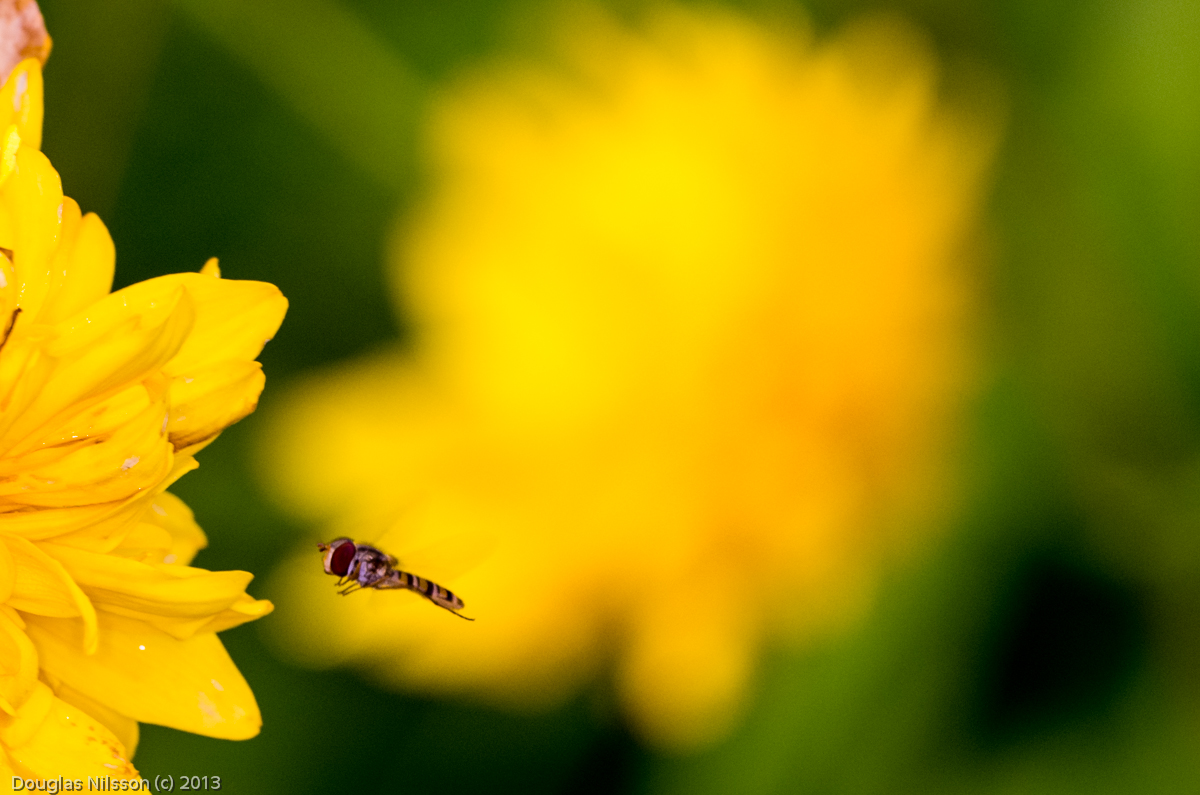
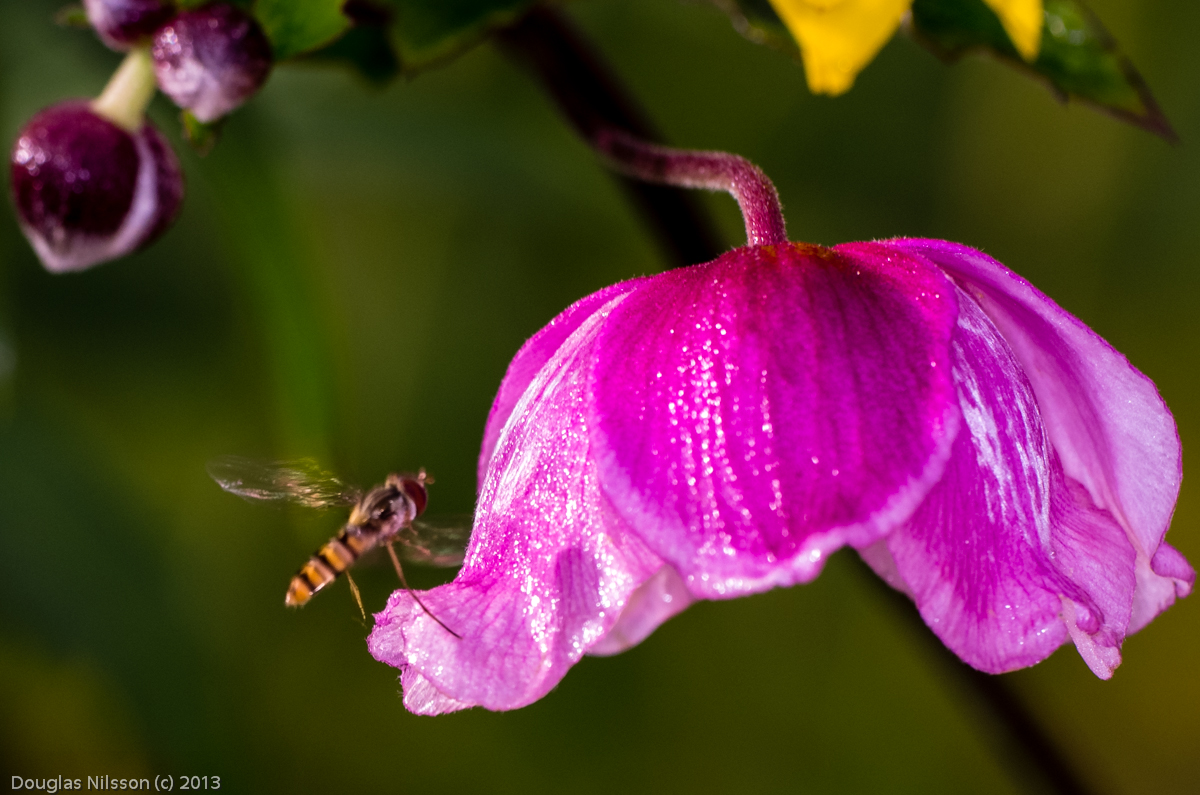
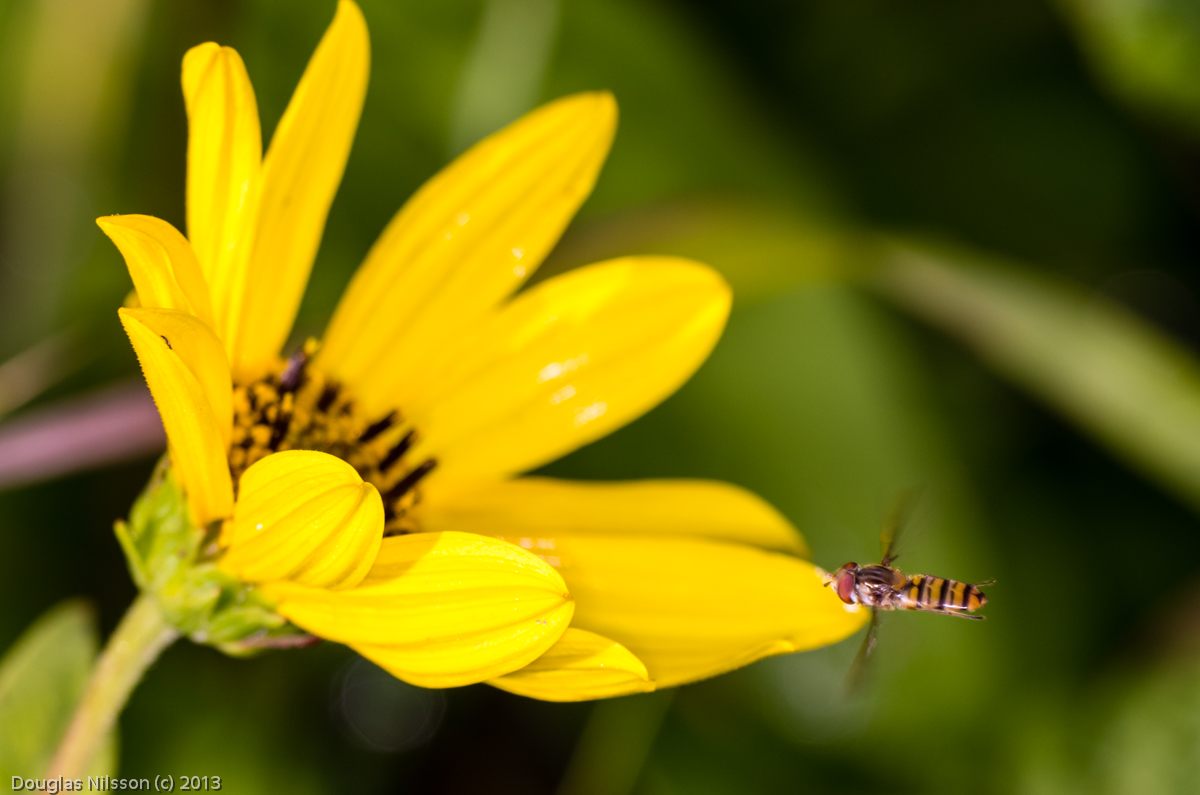
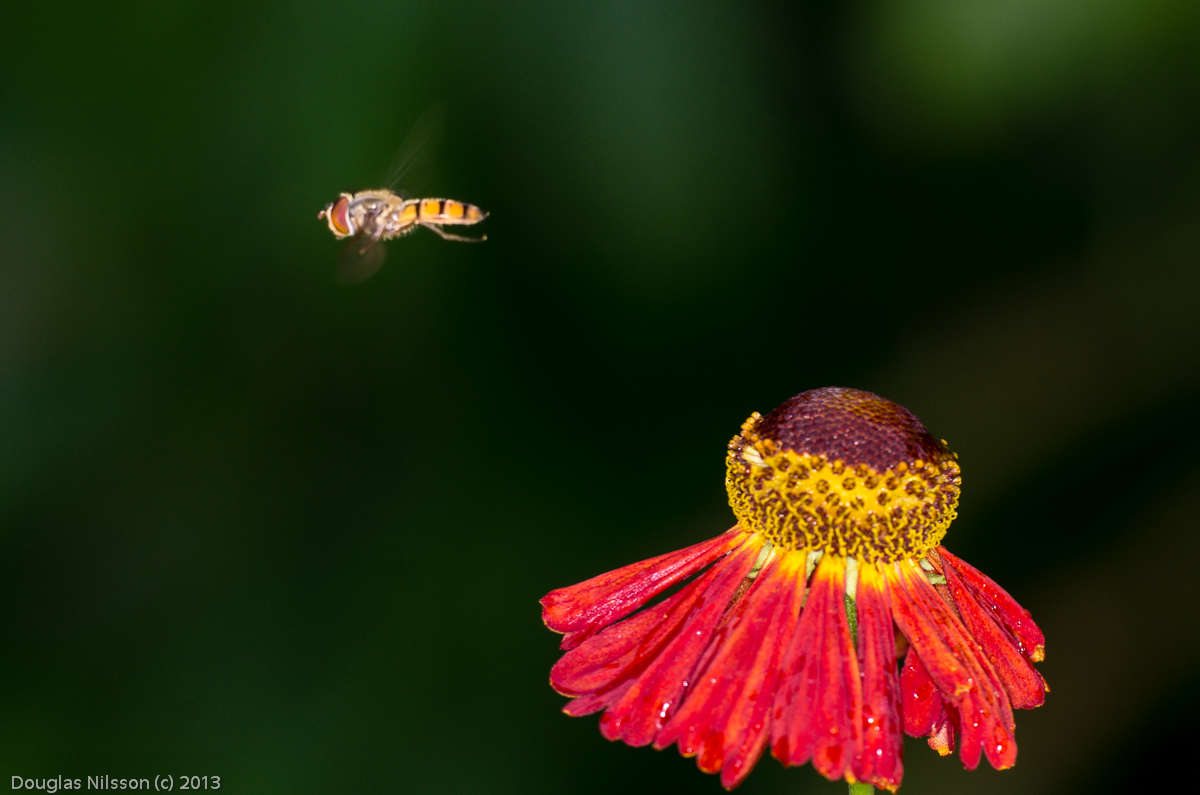
I think BIF originally means Bird In Flight, to capture a flying bird on photo. But catching a flying bug is just as difficult. Probably dragonflies are worst followed by butterflies. But the summer is already so late here that they are rare...so I'm practicing on hover flies.
Getting the bug inside the image frame and relatively sharp is difficult in itself. Then one have to plan composition and keep an eye on the background, preferably giving it a smooth bokeh in colors that contrast against the bug.
These images are taken with the Sigma 180mm macro and Pentax macro flash. For each shot I have of course erased many with the bug outside the DOF or even outside the image frame...but I am getting better.

30 May 2013

Wide open

Konica Heaxanon AR 57mm f1.2 at f1.2 on the Samsung NX20.

20 August 2012

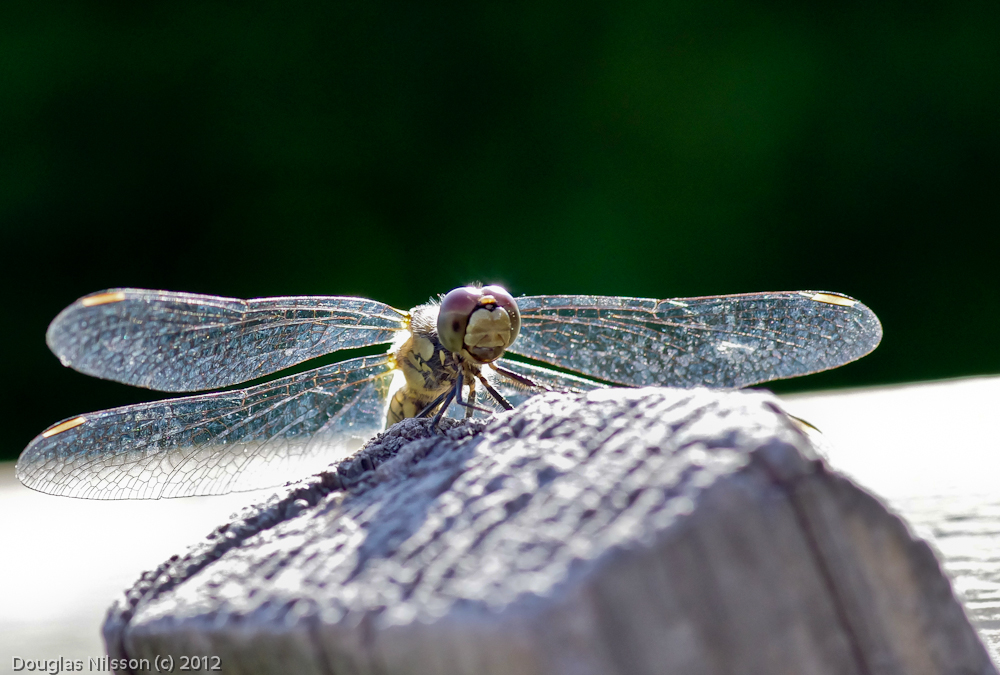
DRAGONFLY ON A SAWHORSE


I'm a beginner when it comes to stacking images for increased DOF, but here is an attempt based on several shots of a dragonfly that landed on our sawhorse yesterday. Afterwards I saw that either the wings or the head where out of focus. In the stacked image, there is only one wing tip that is completely out of focus, though the right wing isn't absolutely sharp. I think it might be worth learning how to stack images. Edit: I should add that the software I used is Alan Hadley's CombineZM. But I have only begun scrapping on the surface of what that software can do.

18 August 2009

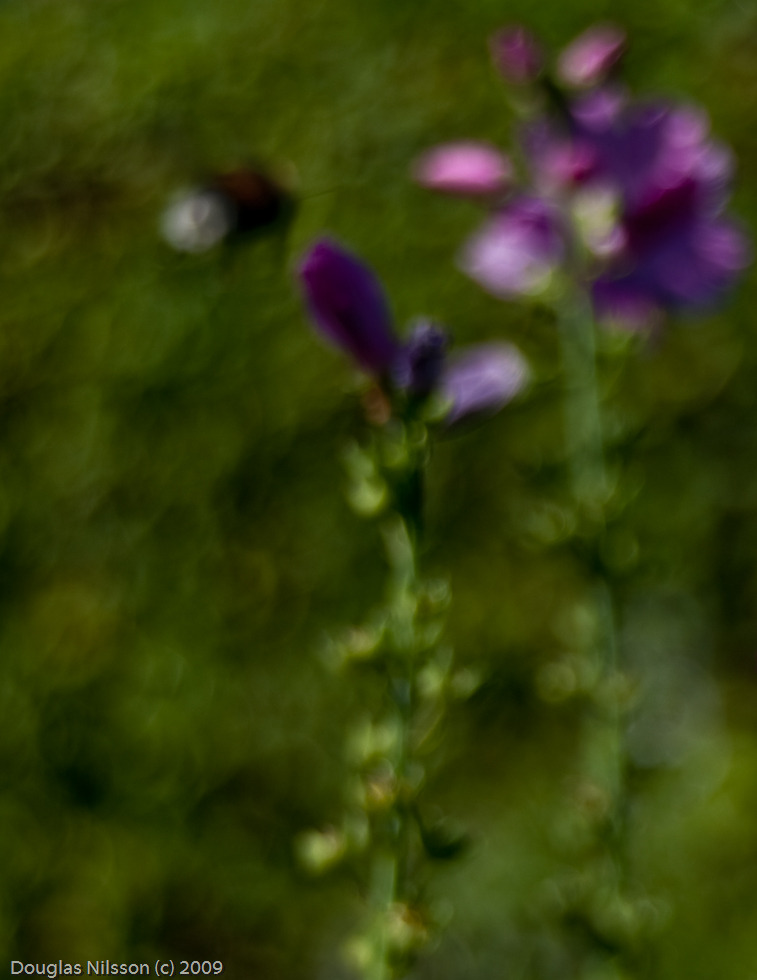
BUMBLE BEE IN BOKEH (BIB)


I've noticed that bird photographers call pictures with a bird in flight for BIF, and that sometimes people use the same abbreviation (for fun) for a flying bee or bumble bee. But this one is BIB, Bumble bee in Bokeh.

Is this just terrible to look like, or does it look like the garden does without your eye glasses? Or is it actually a bit of beauty? You see the bumble bee, right? I didn't until in post processing, so that is pure luck, but the play with bokeh is on purpose, although this is a crop where I've ditched the sharp flower to the left.

The lens is a ~40 years old German m42 mount Meyer-Optik Görlitz Lydith 30mm f3.5 full open. It is one of those zebra striped lenses. Luckily there are enough m42 versions around for you to get one rather inexpensive, unless you want to adapt a Topcon, Exakta or Pentina mount to your camera. I would say it is worth it. The bokeh is smooth like butter. It lets you paint like an expressionist with your camera.

Now, where is that flickr group where you can only post pictures where at least 20% of the surface is bokeh...I think this picture will qualify.

By the way, if this blog looks strange, some pictures are missing. It appears that flickr have currently got itself invisible photos...let's hope it will resolve soon.

PentaxForums.com